
Every scholarship platform is built on the same three steps: complete a profile, browse the matches, apply online. That is the promise on the homepage of ScholarsApp, the top result for scholarship tracker searches, and it is a good promise as far as it goes. It stops at the application. What decides outcomes is the longer middle: the weeks when an application is half-built, a document is missing, and three deadlines land in the same fortnight. Scholarship application tracking earns its keep there, not on the day a deadline turns red.
The four stages worth tracking
- Shortlist. A scholarship is a candidate, with its eligibility read against your profile and its deadline treated as a lead to confirm, not a fact to trust.
- Documents. Transcripts, references, essays and test scores, each with its own lead time. Most missed deadlines are really missed documents: the form takes an evening, the reference letter takes three weeks.
- Submitted. The application is in, with the confirmation saved. This is the stage a deadline-only tracker forgets exists, and it is where follow-ups, interviews and additional documents live.
- Decision. The result, the offer terms if there is one, and the renewal conditions attached to it. An award that must be re-won every year is a recurring deadline, not a finish line.
The verification problem underneath every tracker
A tracker is only as honest as its data, and scholarship data rots. In our own dataset of 494 scholarships, harvested from program pages, only 50 records carry a verified flag, and just 185 records carry a deadline at all. Programs end quietly: the raw harvest behind datasets like ours still circulates records for Canada's Vanier awards, a program that has been replaced, and a deadline copied from a harvest can be weeks away from the real one. The platforms that deserve trust are the ones that say this out loud: a tracked deadline is a prompt to check the program page, not a substitute for it.
What to track besides dates
Three fields separate a working tracker from a calendar with anxiety. The document checklist per application, because it is the real critical path. The decision date or window, because silence after submission has a shape and you should know when silence stops being normal. And the money terms from the start: in our dataset 96 of 494 scholarships are flagged fully funded, and our count of the funding wording shows how rarely the phrase means everything. Tracking an award's conditions is part of tracking the application.
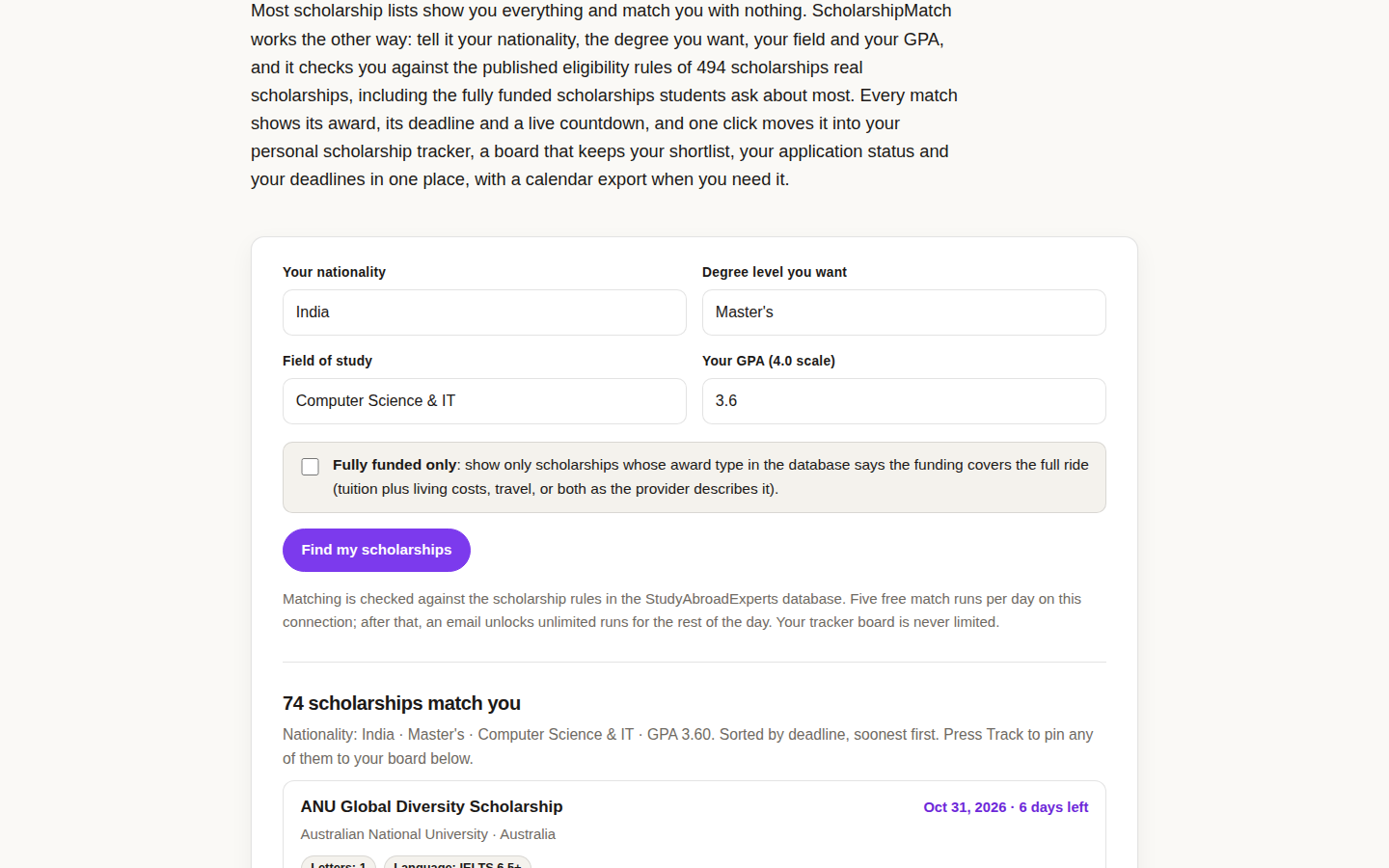
The workflow version of this system, with the apps compared, is in our tracker workflow guide. The tool on this site, ScholarshipMatch, is built around the same stages: run a match, save the scholarships that survive your own check, move each one through its status, and export the deadlines to your calendar. The tracker board is never gated, because a tracker you cannot open in week nine is not a tracker.